Window frame repair in Bow deals with rot, draughts and heat loss where they start, so you can keep your windows rather than replace them. We trace decay with a moisture metre and a probe, then splice in new hardwood, consolidate soft timber with epoxy resin, fit fresh gaskets and upgrade the hardware so the frame is solid, airtight and secure again. Original timber frames and modern uPVC or aluminium frames can both be repaired this way, with better energy performance and many more years of service. Below you will find what frame repair covers and how the work is done.
Key insights
- Timber, uPVC and aluminium frames in Bow are surveyed for rot, twist, draughts and failed seals before any repair is proposed.
- Repair methods include moisture mapping, resin consolidation, hardwood splicing and concealed stainless steel reinforcement to restore strength.
- Every repair aims to close air leaks and cut heat loss, and works alongside insulation and ventilation rather than against them.
- In period and listed houses the original profiles and details are kept while glazing, gaskets and locks are quietly improved.
What Can Window Frame Repair Fix in Bow?
Frame repair in Bow, E3 covers the faults that stop a window doing its job: rotten timber, rusting steel or pitted aluminium, sashes that stick, failed seals and gaps that let the weather in. The aim is to put back strength, airtightness and smooth operation, not only to tidy the appearance.
On timber, soft sections are consolidated with epoxy resin or cut out and replaced with matching hardwood, and weak joints can be reinforced with hidden stainless steel plates. On metal frames, corrosion is removed, the bare metal is primed with a zinc-rich primer and new gaskets are fitted. Bent glazing bars, misaligned hinges and crumbling putty can all be put right without changing the look of a period window. Matching the original profiles while using modern coatings, flexible sealants and low-E or acoustic glass gives a window that performs well and still looks right on a Bow street.
Common Window Frame Problems in Bow Homes
Two frame faults account for most of the calls we take across Bow, E3: rotten timber and persistent draughts that push heating bills up. Rot sets in wherever water gets into unprotected wood, and as it spreads it loosens fixings, seals and glazing beads. Draughts come from perished perimeter seals, sashes that have twisted, and poor joints between the frame and the masonry. All of these respond to targeted repair, better sealing and, where a section is beyond saving, partial replacement.
Rotting Timber Window Frames
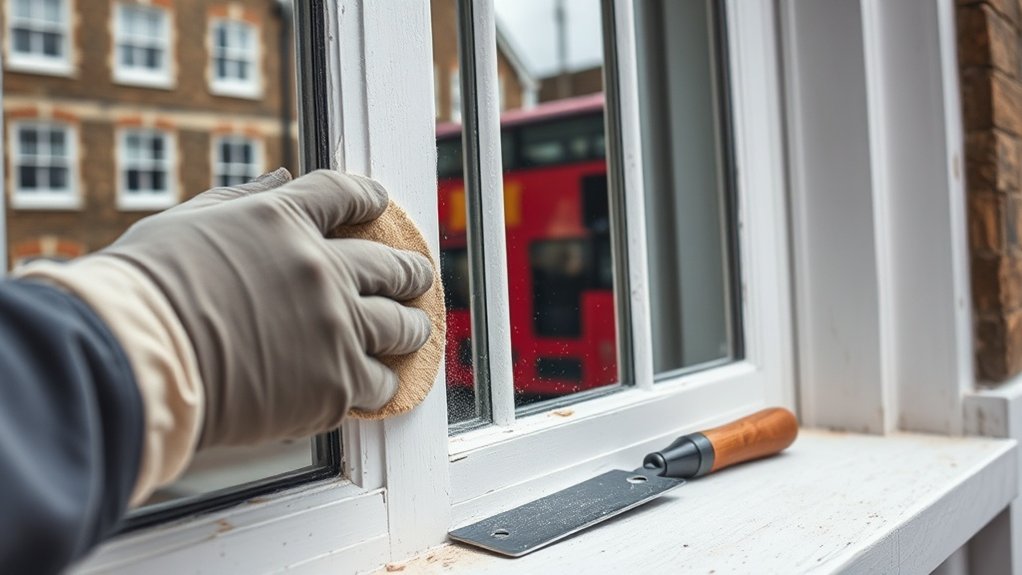
The damp Bow climate attacks timber wherever the paint has failed or water sits in a joint or on a sill. The signs are soft, darkened patches, bubbling paint and sections of moulding that have lost their shape. The survey starts with a moisture metre and a sharp probe to map how far the decay runs. Rather than replace the whole frame, the crumbling fibres are cut back to sound wood and either a matching hardwood splice is let in or a low-viscosity epoxy consolidant is used to firm up timber that is only partly affected. The wood must be dry before any resin goes on.
The repair is finished with a full paint system: primer, microporous undercoat and a UV-stable topcoat, with particular care at end grain, glazing rebates and screw holes where water gets in first.
Draughts And Heat Loss
A room can feel cold with every window shut because warm air is escaping and cold air arriving through tiny gaps in the frame, the sash and around the glass. A smoke pencil or an infrared camera will show where the air is moving: at the meeting rails, the parting beads and the joint between frame and wall. Retrofitted brush seals, compressible rubber gaskets and warm-edge spacer bars then cut both the airflow and the conducted heat loss. On traditional timber sashes the seals sit inside the beads, so nothing shows. Add secondary glazing or insulated shutters and a period window can get close to modern performance without being replaced.
How Bow Property Type Affects Window Frame Repair
The right method for a window frame repair in Bow depends on the building it sits in. A Victorian terrace, a modern apartment block and a house in a conservation area each bring different structures, access problems and materials. Conservation area rules and listed building consent can also restrict the profiles, the glazing and even the sealants and fixings you are allowed to use.
Victorian And Period Homes
With so many Victorian and Edwardian houses across Bow, E3, most frame repairs are conservation-led, keeping the original timber, mouldings and details. A box sash is a balanced system of sashes, cords, pulleys, weights and often decorative glass, and every part has to be considered together. The plan does as little as possible: resin splicing instead of replacing whole members, ventilated glazing rebates, and slimline double glazing where the conservation officer accepts it. Typical findings include:
- Cracked putty around stained or etched glass panels
- Cast iron pulleys and brass fittings painted solid
- Box frames with bowed meeting rails and gaps that whistle in the wind
Modern Flats And Towers
In newer Bow apartment blocks, repairing a frame is as much about coordination as about technique. The window may form part of a curtain wall or a unitised façade, the lease may restrict what a flat owner can touch, and fire safety rules apply to anything that passes through the external wall. Access is decided first: rope access, a cradle or internal-only working that leaves the corridors and fire-stopping undisturbed. Sealants must be low-VOC and compatible with aluminium or composite frames, and the movement joints have to survive wind loading on an exposed elevation. Repairs are then phased elevation by elevation to fit the building's service-charge budget.
Conservation Areas And Rules
In a Bow conservation area the main conversation is with the planning department. Sightlines, section profiles and the proportion of glass to frame are all controlled. Begin with an appraisal of the existing joinery: timber species, where it has decayed and what earlier repairs were done. Check that against the conservation area appraisal and any Article 4 Direction that removes permitted development rights. Within those rules there is still plenty of scope:
- Slimline double glazing fitted inside the original sash profile
- Spliced timber chosen to match the grain, density and movement of the old
- Microporous paints in heritage colours that let the timber breathe
Drawings, section profiles and a written method statement show the planners how the window will perform better while looking the same.
Timber Window Frame Repair for Period Properties
Timber frames in the period houses of Bow were usually well made, but they suffer from water ingress, joints that have opened with age and layers of old paint that hide early rot. A staged investigation is needed: moisture mapping, micro-drilling to test how sound the wood is, and careful paint removal to expose failed joints and hidden decay. Once the extent is known, new hardwood is spliced in, soft areas are consolidated with epoxy, and beads and sills are re-profiled to match the originals. Slimline double glazing or discreet seals can be added without changing the sightlines, and the whole frame is finished with a breathable primer, microporous undercoat and a durable topcoat.
UPVC And Aluminium Window Frame Repair Options
uPVC and aluminium call for a component-by-component approach that respects the tolerances the frame was made to. The survey lists the faults: warped sashes, flattened gaskets, oxidised aluminium, chalky uPVC, worn hinges and tired espagnolette locks. Typical work includes new gaskets, hinge realignment and upgraded multi-point locking to restore the seal and smooth operation. Faded or pitted surfaces can be renewed with coatings formulated for plastics and powder-coated metal, applied so the drainage slots stay clear. What you see afterwards:
- Fogged panes replaced with clear, dry glass
- Dull, pitted frames brought back to clean, sharp lines
- Stiff openers that close and lock with one easy movement
Repair Vs Replacement For Bow Window Frames
Deciding between repairing and replacing Bow, E3 window frames starts with the condition of the frame: how far the decay has gone and whether the hardware can be saved. Next comes the money, setting the repair cost and the extra years it buys against the price and lifespan of new windows. Finally there is energy performance, because new or upgraded frames and glass reduce heat loss and lower heating bills for years.
Assessing Frame Condition
We judge every frame on three points: structural soundness, how it performs as part of the building envelope, and what the planning rules allow. The checks look for:
- Rot at the sill ends, open joints, or rusting metal under flaking paint
- Condensation marks, draught paths and cold patches found with a thermal camera or smoke pencil
- Failed putty, perished sealant and loose beads that no longer keep the weather out
Moisture readings, a check on the fixings into the masonry and photographs of each defect complete the picture.
Cost And Longevity
Compare two paths, repair and maintain against full replacement, and for each frame estimate how many years it has left given the material, its exposure and how similar frames in Bow have aged. In most cases a targeted repair, whether spliced timber, corrosion treatment or resealing, adds another 10 to 20 years at a fraction of the cost of new windows, and it keeps the appearance that conservation areas demand. Where rot has reached the structural joints or the same frame keeps failing, replacement usually works out cheaper over its life.
Energy Efficiency Considerations
Energy performance is often what tips the decision in Bow, with Approved Document L setting the bar for any new glazing. The comparison should cover U-values, airtightness and thermal bridging, not just visible decay. A thermal imaging scan shows exactly which frames are losing the most heat, and slim high-performance double glazing can sit inside a traditional sash profile without anyone noticing. In a period house, a deep refurbishment upgrades the gaskets, parting beads and glass while keeping the heritage profile. Full replacement lets you specify thermally broken frames, warm-edge spacers and trickle vents for the biggest measurable gain.
Window Frame Repair Costs In Bow, E3 Explained
The price of window frame repair in Bow depends on the frame material, how deep the decay goes, how hard the window is to reach and whether the repair is combined with new glass or other work in the room. Quotes are usually split into survey, workshop fabrication and site installation. To picture where the money goes, consider:
- Routing out rotten timber and splicing in machined hardwood inserts
- Realigning an aluminium frame, fitting new thermal breaks and gaskets
- Replacing the glass with low-E units at the same time so the frame is only opened once
When quotes arrive, compare the labour hours, the component specifications and the guarantees, not just the total at the bottom.
See our main window repair page for the full range of options in Bow. Related work we take on includes window handle replacement and window draught proofing.
Frequently Asked Questions
Can Window Frame Repairs Be Done Without Disturbing Listed Building Planning Permissions?
Usually, provided the work is like-for-like. Repairing a frame with matching timber, the same profiles and traditional methods counts as maintenance and does not normally need fresh listed building consent. Hidden improvements such as draught seals in the beads or a spliced hardwood insert are generally acceptable because nothing visible changes. Altering the dimensions, the glazing pattern or the external appearance will need consent, so speak to the conservation officer before work starts.
Do I Need to Move Furniture or Curtains Before the Repair Team Arrives?
Please do. Clear a space of about one to one and a half metres in front of each window so the team can set up tools, dust sheets and extraction. Take down curtains and blinds, or at least tie them well back, because sanding, routing and resin work produce fine dust that is hard to get out of fabric. Move anything fragile off the sill and nearby shelves. Ten minutes of preparation keeps the dust control effective.
Can Window Frame Repairs Be Carried Out Outside Typical Weekday Working Hours?
Often, yes. We can work early mornings, evenings or Saturdays for homes that are empty during the day or for shops and offices that cannot close. A few things need agreeing first: access, how much noise the neighbours will tolerate, and whether there is enough daylight for external work. Resins, sealants and paints need the right temperature and time to cure, so the team will plan the order of tasks so that curing times fall overnight.
Are Window Frame Repairs Covered by Home Insurance Policies in Bow?
Sometimes, but only for sudden damage. Buildings insurance normally pays when a frame is damaged by storm, impact, fire or a break-in, and may cover accidental damage if you have that extension. Rot, wear and gradual deterioration are excluded by almost every policy. If the damage was a one-off event, photograph it straight away, get a detailed quote describing the cause, and check the policy wording for the relevant peril and excess before you claim.
Summary
Repairing your window frames keeps the rot out, tightens up the envelope of the house and improves security, all for far less than new windows. Acting at the first soft sill or cold draught keeps the job small and the original frames in place. Call us for a free survey and quote on any window frame in Bow.