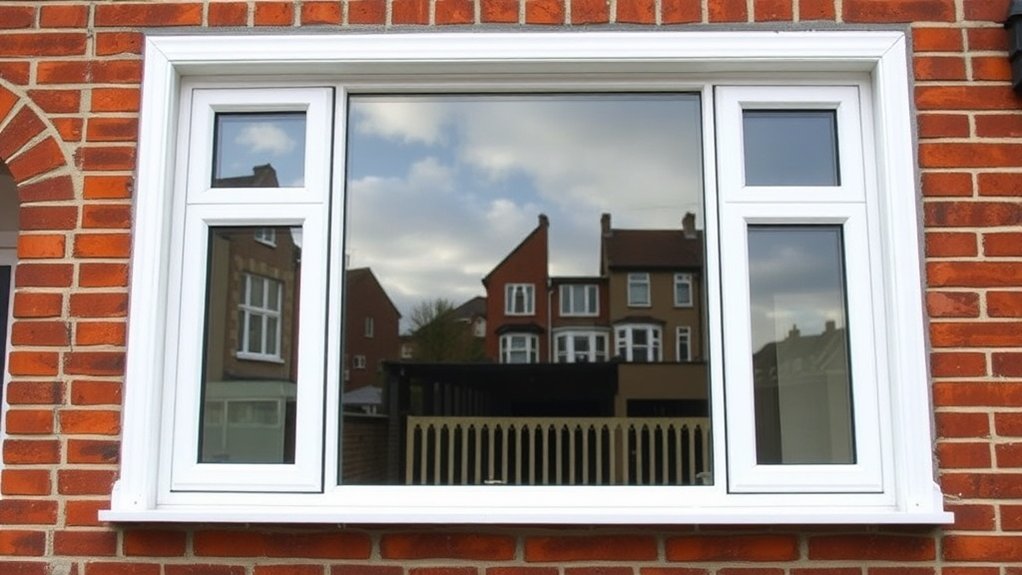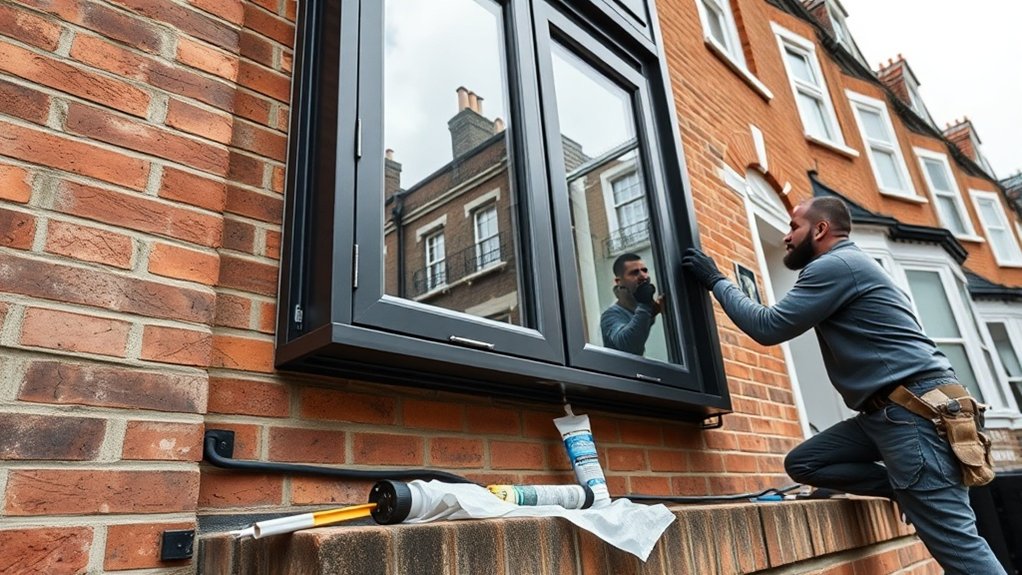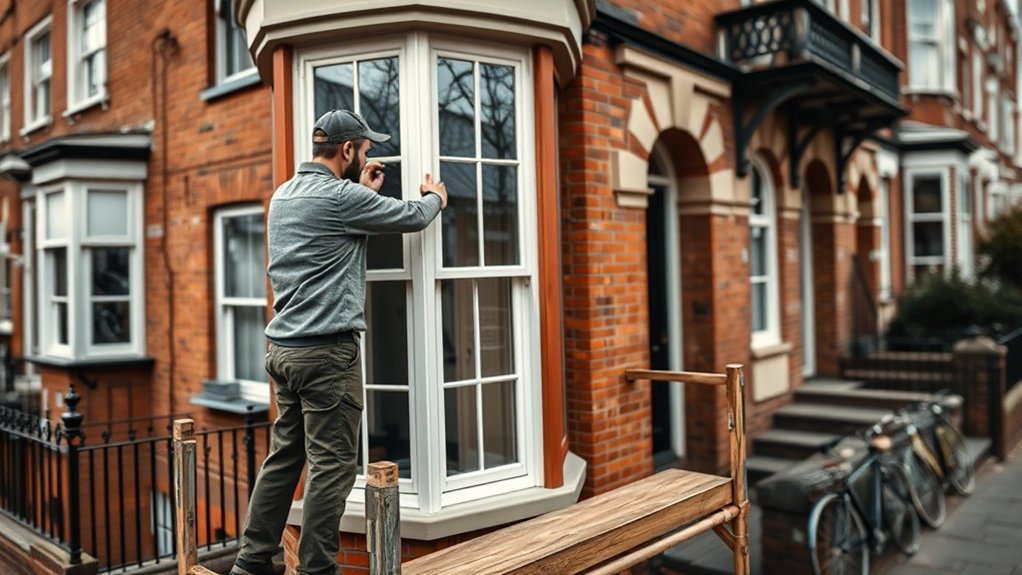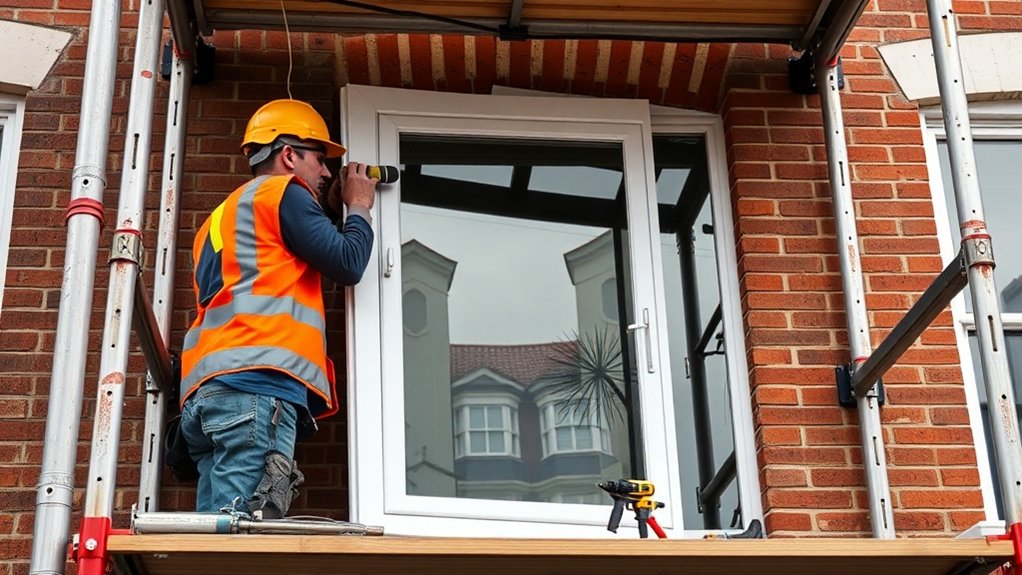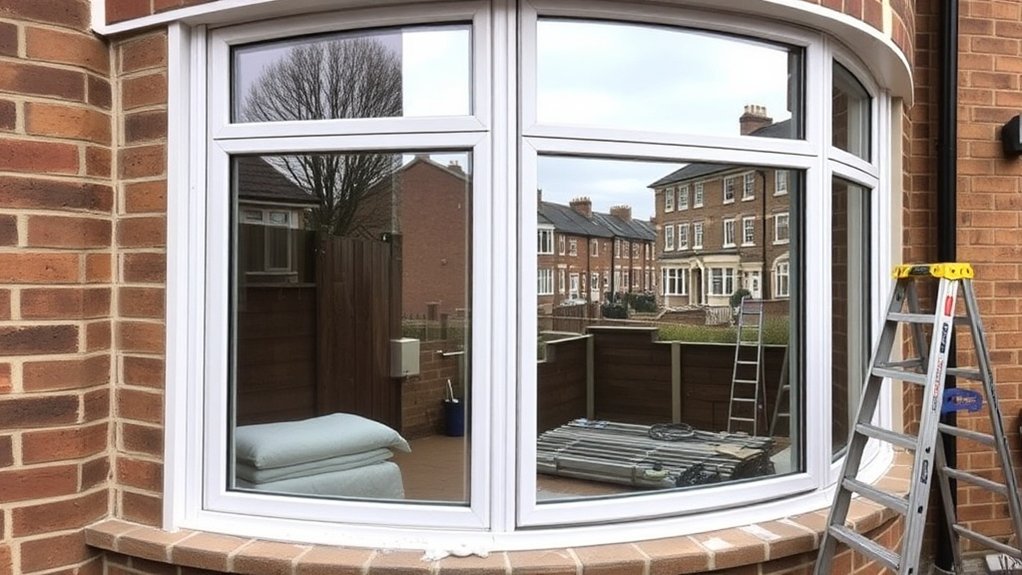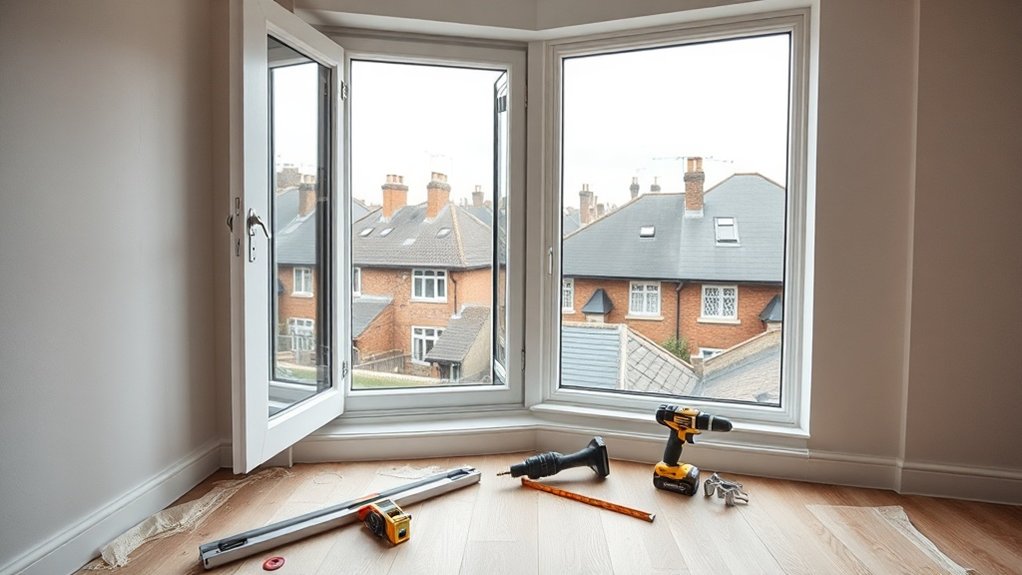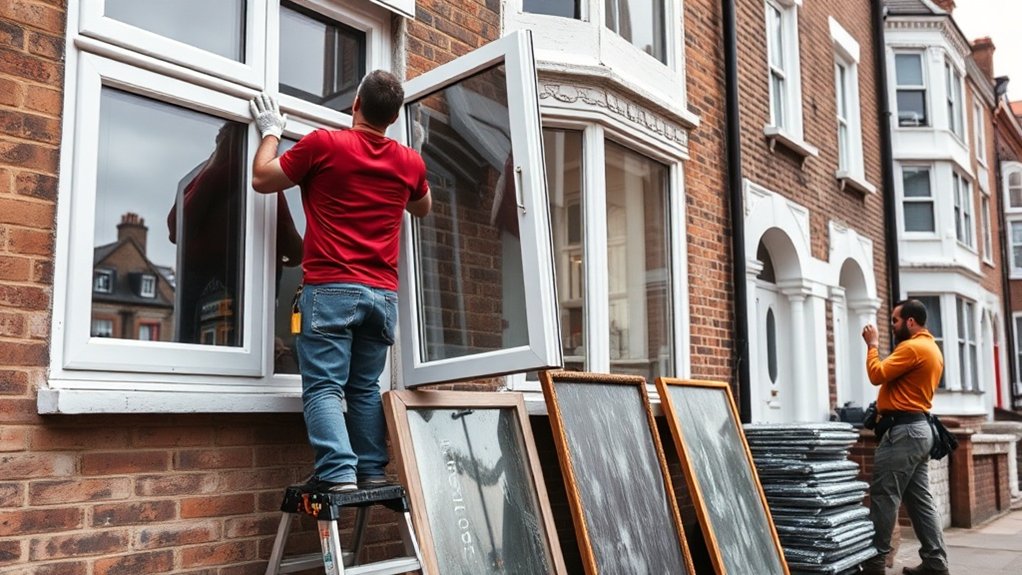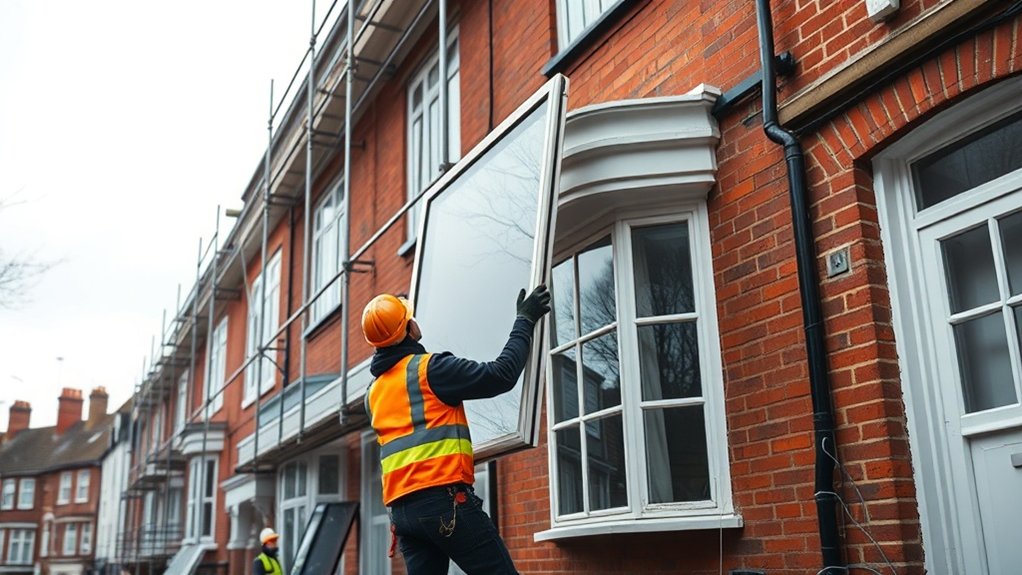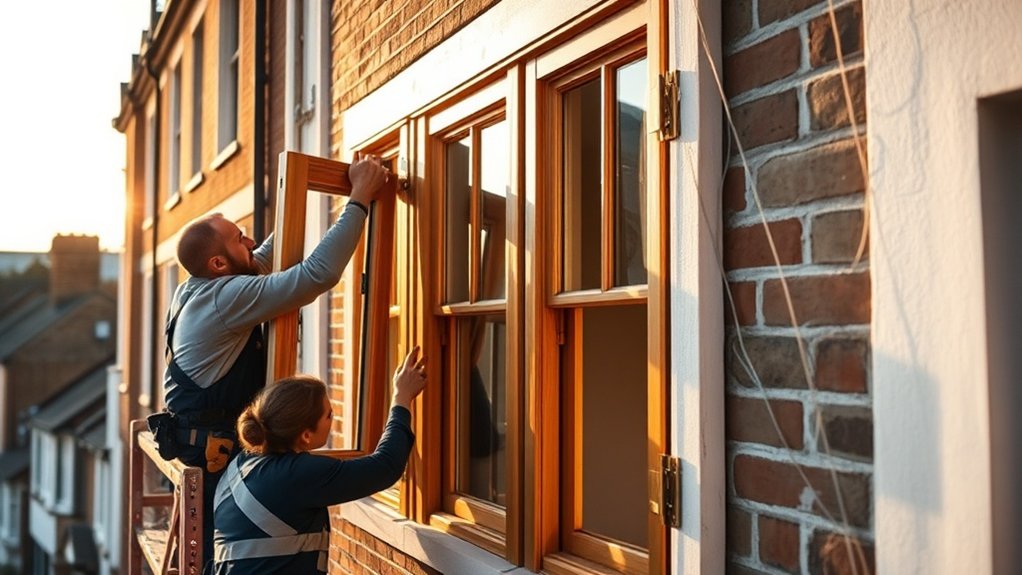
Window installation in Bow means working with a mix of Victorian terraces, 1930s semis, post-war flats and new-build apartments, often on streets where parking a van is a challenge and where the planning department has views on what the front elevation should look like. The frame you choose, uPVC, aluminium or timber, has to suit the building, the budget and any conservation rules, and the glass has to meet Part L U-value limits and, on busy roads, keep the noise out. Supplied and fitted, most windows fall somewhere between £650 and £2,200 depending on material and complexity.
Key insights
- Conservation areas, restricted parking and period facades in Bow shape which frames, glass and fitting methods are practical before cost is even discussed.
- uPVC is the economical low-maintenance choice, aluminium gives slim strong frames, and timber suits period houses and listed buildings.
- Replacement windows must meet the Part L U-value limit of 1.4 W/m²K, and busy roads call for laminated acoustic glass.
- Typical supplied-and-fitted prices run around £650 to £900 for uPVC, £900 to £1,400 for aluminium and £1,400 to £2,200 for bespoke timber sashes, before access costs.
- Use a FENSA or Certass registered installer so the work is self-certified under the Building Regulations and you receive a compliance certificate.
What’s Different About Bow Window Installation?
Fitting a frame and glazing it is the same job everywhere, but the surroundings in Bow add complications. Much of the housing is over a century old, with openings that are out of square and lintels that have sagged. Conservation areas and listed buildings restrict what can be changed on the street-facing elevation, so slim double-glazed units, putty-line sightlines and sections that copy the original joinery are often required rather than optional.
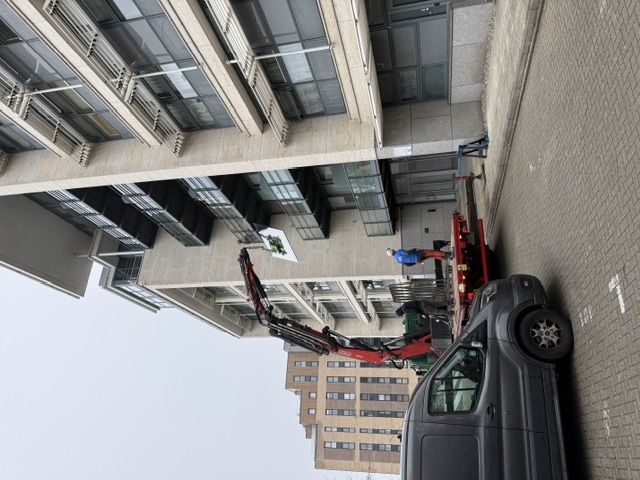
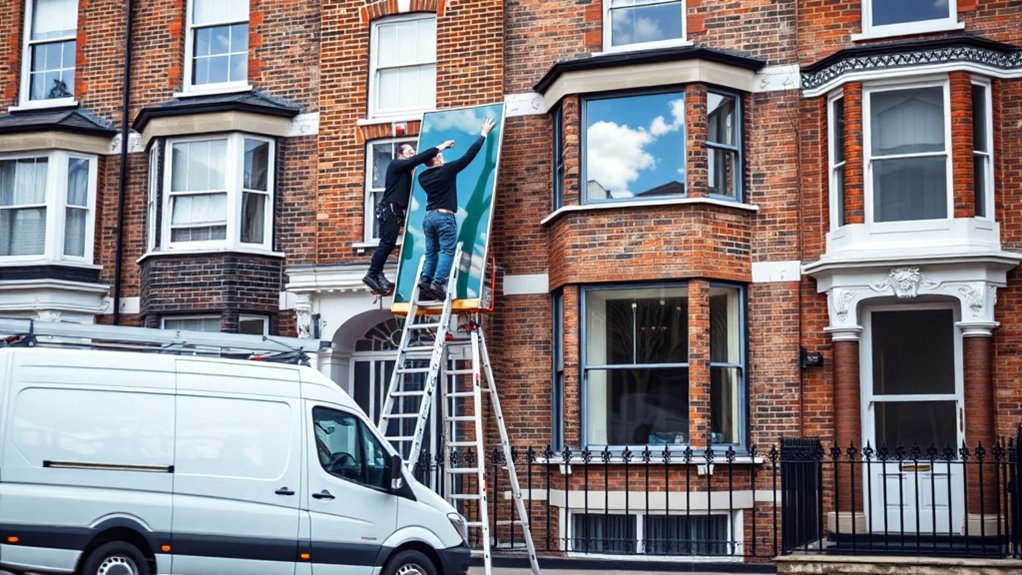
Access is the next hurdle. Narrow streets, permit parking, no room for scaffold towers and tight communal stairwells in converted houses all affect how we sequence the work and get large units upstairs. Noise is a third factor: on main roads and near railway lines we specify laminated glass, compression seals and acoustic trickle vents as standard. We also choose ironmongery that can be adjusted, gaskets that can be replaced and glazing rebates that drain.
How Much Does Window Installation in Bow, E3 Cost?
Budgeting for new windows in Bow is easier once you know the usual price bands per window and what pushes a quote up or down. Frame material, glass specification, the shape and size of the opening, how easy it is to reach, and whether planning consent or FENSA certification is involved all move the figure. The sections below set out typical prices and the main cost drivers.
Average Bow Installation Prices
Prices in Bow tend to sit above the national average because labour rates are higher and access is harder. A standard uPVC casement replacement typically costs around £650 to £900 supplied and fitted. Thermally broken aluminium windows usually come in at £900 to £1,400 per opening.
For period houses, a bespoke timber sash replacement commonly runs between £1,400 and £2,200 per window because of the joinery involved and the detailing conservation officers expect. Security upgrades such as multi-point locks, laminated glass and reinforced hinges add roughly £120 to £250 to each unit.
A whole-house replacement in Bow generally lands between £8,000 and £25,000 or more, depending on the number of openings, access arrangements and the specification chosen.
Key Factors Affecting Cost
Knowing what drives the price lets you compare quotes fairly and trim the specification where it will not hurt. The frame material, the glass build-up and the opening type are the big three: aluminium and composite frames with thermal breaks cost more than uPVC, and triple glazing, acoustic laminates and very large panes add to the glass cost.
Shape and access come next. Arched heads, bay returns, wide spans and elevations that can only be reached from a scaffold or a platform all add labour and plant hire. In conservation areas and listed buildings in Bow, E3, matching historic sightlines usually means bespoke joinery and slimline units, which are dearer than standard products.
Finally the installation detail matters: airtightness tapes, insulated cavity closers and any built-in ventilation or sensors all add a little to the price but improve the result.
Key Choices Before You Install New Windows
A few decisions early on determine performance, compliance and how disruptive the job is. The first is whether the old frame comes out completely or a new frame is fitted within it; full removal is almost always better because it lets us deal with cold bridging and seal the perimeter properly. The second is the glass: U-value, g-value and the spacer bar. In Bow, a low-E coating with the right g-value keeps south-facing rooms from overheating without making them gloomy.
Then come the opening styles, which must give the ventilation and escape openings the Building Regulations require, with restrictors where children or high-level windows are involved and PAS 24 hardware where security matters. Last is how the window sits in the wall: positioned in line with the insulation, taped or membraned at the perimeter, sealed with the right mastic and detailed so that any water that gets in can drain back out.
Best Window Styles for Bow Homes and Flats
Choosing a style for a Bow property is a balance between looking right, performing well and satisfying local rules. Period houses usually call for sliding sashes in timber or a convincing uPVC equivalent, with attention to glazing bar profiles and conservation-area requirements. Newer and refurbished buildings suit modern casements or tilt-and-turn windows with multi-chambered frames and double glazing that achieves low U-values.
Sash Windows For Period Properties
Modern glass has moved on, yet sliding sashes remain the right answer for the terraces and villas of Bow because they keep the proportions the street was built with while meeting current standards.
- Profile matching: slim meeting rails, putty-line glazing and correctly shaped horns so the new sash reads like the original joinery.
- Construction: through-wedged tenons, resin repairs to sound existing boxes and spliced timber where only part of a frame has failed.
- Ventilation: properly weighted cords and pulleys, with trickle vents hidden in the head so Part F is met without visible grilles.
- Materials and finish: engineered or modified softwood, a microporous paint system and discreet locks, giving a facade that looks right and needs little upkeep.
Energy-Efficient Modern Window Designs
Sashes protect the look of a period facade, but most Bow, E3 homes and flats will do better with window designs built to cut U-values, improve airtightness and manage solar gain.
Thermally broken aluminium or aluminium-clad timber frames with low-E, argon-filled double or triple glazing are the usual recommendation. On tight plots and in older buildings, tilt-and-turn units give controlled ventilation and let you clean the outside from indoors, while high-performance casements with double seals and multi-point locking give excellent airtightness.
On south and west elevations we pair solar-control glass with deep reveals or external shading. Warm-edge spacers, insulated frames and compression seals reduce cold bridging, draughts and condensation at every window.
Comparing Window Materials for Bow Properties
With housing in Bow ranging from Victorian terraces to new flats, the frame material has to suit both the performance brief and any planning or leasehold restrictions. Decide what matters most, thermal performance, rigidity, upkeep or looking right in a conservation area, and the choice narrows quickly. The frame also affects how well the window stays airtight over time and whether it can take add-ons such as solar-control glass or switchable privacy glazing.
- Timber: the natural choice for heritage facades; ask for engineered softwood or hardwood with a factory-applied microporous finish.
- uPVC: economical and easy to maintain, but check the reinforcement on wide openings so the frame does not bow.
- Aluminium: slim sightlines and great strength; always thermally broken, ideally with a marine-grade powder coat near the coast.
- Composite (aluminium-clad timber): warm wood inside and weatherproof metal outside, well suited to design-led refurbishments.
Double vs Triple Glazing in Bow
Deciding between double and triple glazing for a Bow home comes down to U-values and solar gain, to how much noise you need to shut out from roads, railways or flight paths, and to whether the higher cost is repaid through lower bills, extra comfort and resale appeal.
Energy Efficiency Comparison
Heating is expensive and Part L is strict, so it pays to know how the two options differ before ordering. We compare whole-window U-values, g-values and spacer bars rather than just counting panes to judge real performance in Bow, E3's climate.
- U-values: triple glazing can reach around 0.8 W/m²K against roughly 1.2 W/m²K for a good double-glazed unit, which matters on exposed elevations.
- Solar gain: on a south-facing wall a higher-g double-glazed unit may collect more free winter heat than triple.
- Frames and spacers: without thermally broken frames and warm-edge spacers much of the benefit of triple glazing is lost.
- Conservation settings: slimline double-glazed or vacuum units keep authentic sightlines while still meeting the regulations.
Noise Reduction Benefits
The amount of noise you need to lose decides whether good double glazing is enough or triple is worth it. We look at traffic volume, aircraft routes and railway proximity, then match the glass to measured decibel levels where a survey exists.
Double glazing with panes of different thickness and one laminated acoustic leaf typically achieves a reduction in the high twenties to mid thirties of decibels. A wider cavity of 14 to 20 mm with argon fill helps break up airborne sound.
Triple glazing adds more when it is detailed properly: mixed pane thicknesses, at least one laminated pane and cavity depths chosen to avoid resonance. Beside an A-road or a junction we combine the unit with acoustic sealant around the perimeter and insulated reveals so sound does not sneak around the frame.
Cost And Value
Noise sets the brief, but money decides whether triple glazing makes sense over a high-specification double-glazed unit in Bow. The question is the upfront cost against what you get back over the life of the window..
- Upfront versus running cost: triple glazing usually costs 20 to 40% more but trims heating on exposed and north-facing walls.
- Payback: in a well-insulated house the saving may take 15 to 20 years or more to recover, so model it with SAP or PHPP before committing.
- Acoustics: triple glazing beats a well-designed asymmetric double unit only marginally on sound, so do not pay extra for noise alone.
- Mixing specifications: put triple glazing on the noisiest and coldest elevations and good double glazing elsewhere to get the best return.
Bow Window Regulations and Planning Rules
Before ordering anything, check how planning rules in Bow and the Building Regulations govern the size, position, glass and fire performance of your new windows. Planning consent runs alongside Approved Documents B for fire, K for safety glazing, M for access and Approved Document Q for security in new dwellings.
In conservation areas and listed buildings the visible profile is controlled: expect to specify slimline double glazing, putty-fronted sightlines and like-for-like timber sections. On street elevations planners look closely at opening style, frame depth and the pattern of glazing bars.
Escape windows in bedrooms need a clear opening of at least 0.33 m² and 450 mm in each direction with the sill no higher than 1100 mm, and fire-stopping around frames must be kept intact. For security we normally fit PAS 24 tested hardware, laminated glass and a fixing pattern that resists levering.
Energy Ratings and Lower Heating Bills in Bow, E3
With planning settled, the windows still have to earn their keep by cutting heating bills in Bow. We recommend at least a B rating under the Window Energy Rating scheme and ideally A+, which keeps the U-value low and lets in useful winter sun without summer overheating.
- Ask for figures: a certified whole-window U-value of 1.2 W/m²K or better and a low-E coating chosen for the orientation of each wall.
- Get the glass build-up right: argon-filled double or triple glazing with warm-edge spacers to cut losses at the pane edge.
- Reset the heating: a smart thermostat recalibrated after installation stops the boiler running to a heat loss that no longer exists.
- Think ahead: if solar panels are planned, lower space-heating demand frees generation for an EV charger or a battery.
Noise-Reducing Windows for Busy Bow Streets
Thermally efficient glass does not automatically block sound. On Bow's main roads and near the railway you need windows with proven acoustic figures, and the starting point is a target decibel reduction based on a noise survey rather than a guess.
Asymmetric double or triple glazing with one laminated acoustic pane and a wider-than-normal cavity, argon or krypton filled where the budget allows, works best.
The frame is as important as the glass. Multi-chambered uPVC or thermally broken aluminium with continuous compression gaskets, perimeter joints fully sealed with acoustic mastic and fixings packed correctly all stop sound flanking around the unit. Ask for manufacturer test data to BS EN 14351 and BS EN ISO 10140 so the performance is verified rather than claimed.
More Secure Window Installation for Bow Homes and Flats
Energy and noise tend to dominate the conversation, but a secure installation in Bow, E3 deserves equal care, especially in ground-floor bays of older houses and in flats with shared entrances. Frame, sash, glass, fixings and locks must work together as one tested system to resist a burglar.
- Reinforced frames: steel- or composite-reinforced uPVC or aluminium with mechanically fixed corners, not welded seams alone.
- Secure glazing: laminated glass held with security tape and internal beads so the pane cannot be prised out from outside.
- Proper fixings: frames anchored into the structural reveal with tested security fixings, never into plaster or soft packing.
- Hardware: multi-point locks, hinge-side bolts and lockable handles, specified so they do not spoil period sightlines.
How to Choose a Reliable Window Installer in Bow
Two things set a good installer apart in Bow: skill you can see and compliance you can check. Confirm FENSA or Certass registration, public liability insurance and approved-installer status with the window manufacturer, and ask how they handle Part L and Part F on high-performance glazing.
Insist on a technical survey rather than a sales call. A competent firm will tell you the U-values it is quoting, how ventilation will be provided and how the frames will be fixed to brick, block or timber.
Pin down aftercare too: a maintenance schedule, a return visit to adjust hardware, and warranty terms for frames, glass and workmanship. The quote should itemise profiles, glass build-ups, sealants and perimeter insulation so you can compare like with like.
Bow Window Installation Process: Step-by-Step Guide
A professional installation in Bow follows a set order that protects the building, keeps the work compliant and preserves the manufacturer's warranty. Timings are agreed around access, noise restrictions and any scaffold or platform hire, and final measurements are taken by the installer so the units fit the real openings and the desired look.
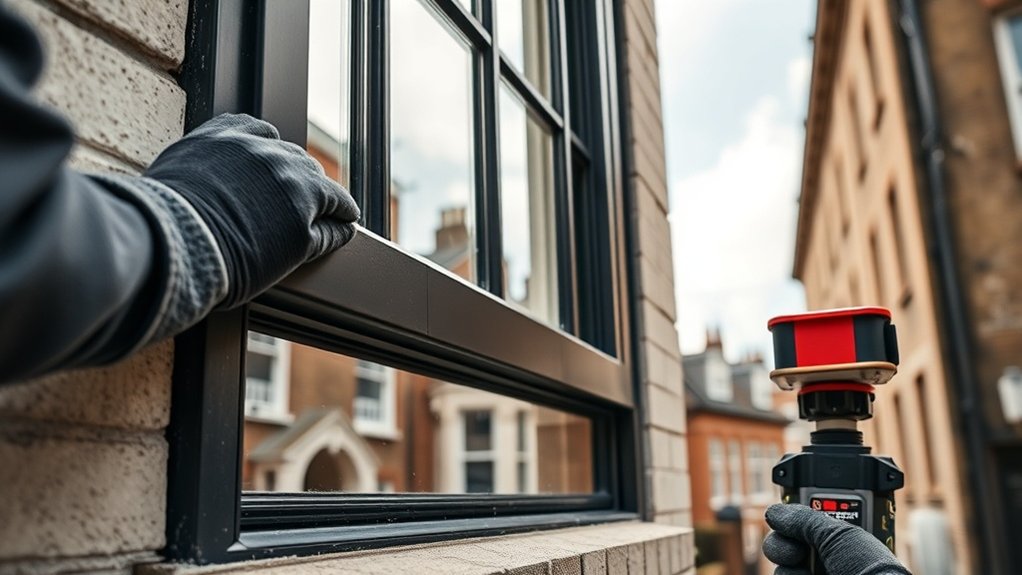
- Remove the old frames, inspect the reveals and lintels for rot or damage, and laser-check the opening for plumb, level and square.
- Pack and mechanically fix the new frame, then confirm tolerances with gauges and a digital level before anything is sealed.
- Apply airtightness tapes, sealants and insulated closers in the correct order so water drains out and vapour stays in the right place.
- Hang the sashes, adjust and test the hardware, record the performance data and issue the FENSA or Certass certificate.
Window Care, Common Mistakes, and When to Replace
After sign-off, how you treat the windows in Bow, E3's weather decides whether they last thirty years or start failing in ten. A simple routine works: a quick look every quarter, a seal check once a year and a note of any hardware or trickle-vent adjustments.
Clean with a pH-neutral product and avoid scouring pads that mark glass coatings and powder-coated frames. Do not seal over drainage slots, paint over gaskets or ignore the first sign of misting between the panes.
Replacement is due when seals fail and the cavity fogs, when timber goes soft, when uPVC profiles distort, when sashes drop or stick, or when the U-value no longer fits your energy plans. At that stage a new unit beats repair on both performance and lifetime cost.
If this is not quite what you need, we also cover aluminium windows.
Frequently Asked Questions
Can I Stay in My Home During the Entire Window Installation Process?
Yes, almost everyone does. We work one room at a time, so each opening is empty for an hour or two at most and is sealed and weathertight before we move on. Expect some noise from removing old frames and drilling fixings, and keep one room clear as a refuge. Clearing furniture, curtains and blinds from around each window beforehand speeds the job, and valuables are best moved away from the work area. A typical three-bedroom house in Bow takes two to three days.
How Will New Windows Affect My Property’s Resale Value in Bow?
Buyers and surveyors in Bow look at window condition early, so new units usually help a sale. A better EPC rating, lower heating bills and quieter rooms are all selling points, and buy-to-let investors in particular prefer not to inherit a glazing bill. In a conservation area, slimline double glazing or heritage sashes avoid any planning question that could stall a purchase. Keep the FENSA or Certass certificate, the guarantee and any acoustic or thermal data together; a solicitor will ask for the certificate and a surveyor will note the Window Energy Rating in the report.
Are There Eco-Friendly or Recycled Window Options Available for Bow Homes?
Yes. Timber frames from FSC or PEFC certified forests are the lowest-carbon option and can be repaired rather than replaced. Aluminium frames are now widely made with a high recycled content and are fully recyclable at the end of their life, and some uPVC systems use recycled cores. Pair any of them with low-E, argon-filled double or triple glazing to lower running carbon as well as embodied carbon. Ask the manufacturer for thermal calculations, an Environmental Product Declaration and a recyclability statement so the claims can be checked rather than taken on trust.
Can I Get Windows That Reduce UV Fading on Furniture and Flooring?
You can. A standard low-E unit already removes a good share of ultraviolet, and adding a laminated pane with a UV-filtering interlayer takes that to around 99%, which protects timber floors, upholstery and artwork without visibly tinting the room. Spectrally selective coatings go further by trimming heat gain as well. Ask the installer for the glass data sheet showing g-value, light transmission and UV transmittance, and check the product is tested to the relevant EN standards, so you know exactly what the UV protective glass will and will not do.
Do Bow Installers Offer Smart or Automated Window Opening Systems?
Yes, and they are increasingly common in Bow loft conversions and glazed extensions. Motorised chain or linear actuators fit top-hung casements, roof windows and high-level vents, and they can be linked to rain, temperature and CO₂ sensors or to a timer. Most connect to a smart hub using KNX, Zigbee or Wi-Fi so you can open and close them from an app, by voice or through a building management system. On a large rooflight the same motor can provide smoke ventilation.
Summary
Done properly, window installation in Bow is an upgrade to comfort, security and compliance, not just a swap of glass. You now know the price bands, the U-values to ask for, the materials that suit each building and how a correct installation runs from survey to snagging. The next step is simple: book a free survey with us, ask for the documented guarantees, and plan a light maintenance routine so the new windows keep performing for decades. Our local glaziers in Bow handle domestic and commercial work from the same base, so one call covers it all.