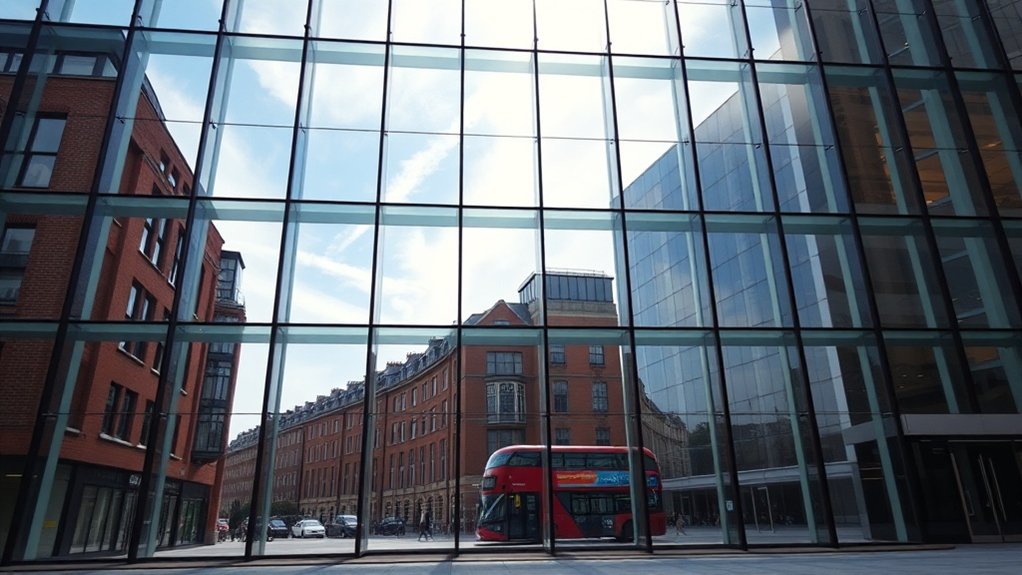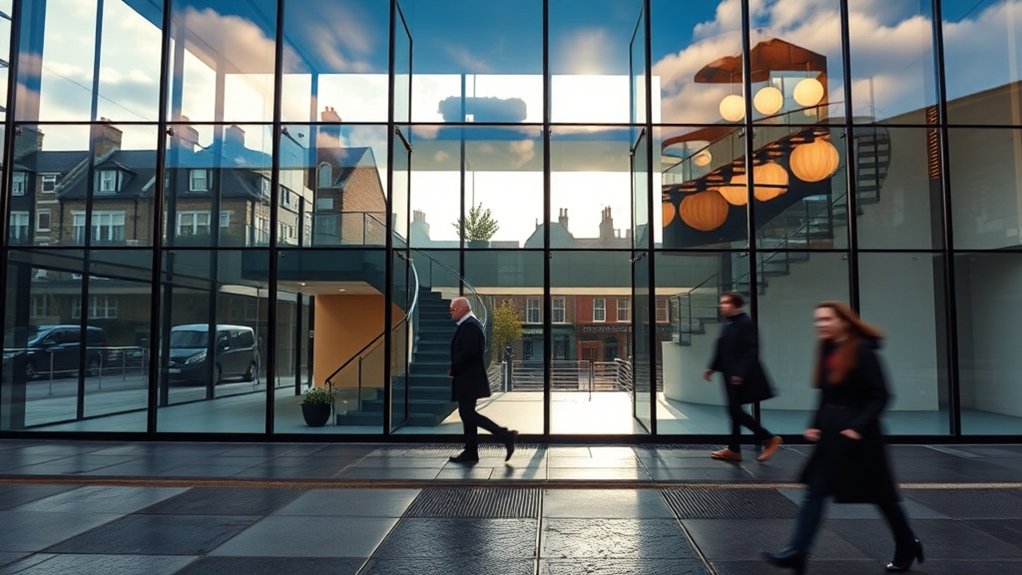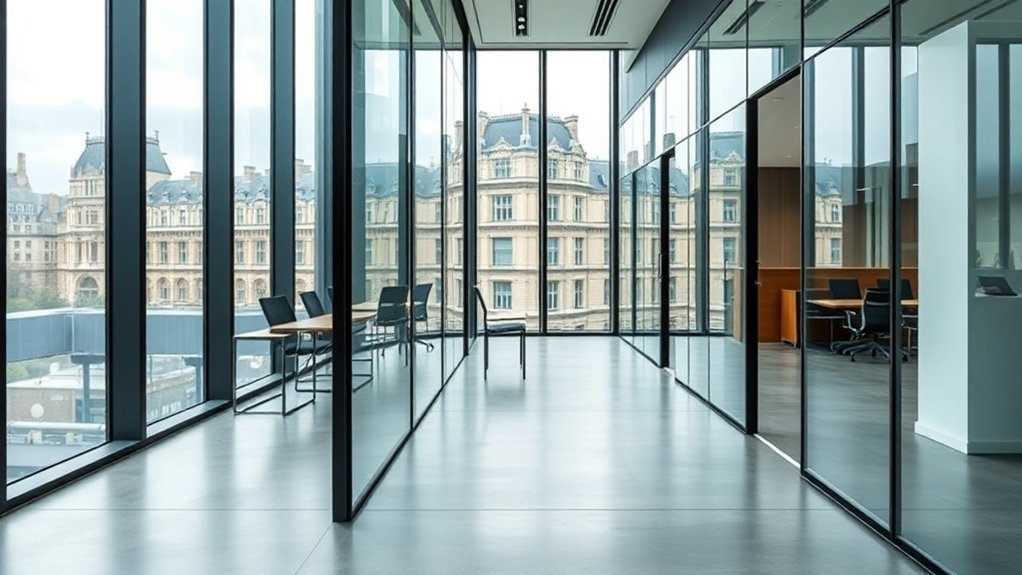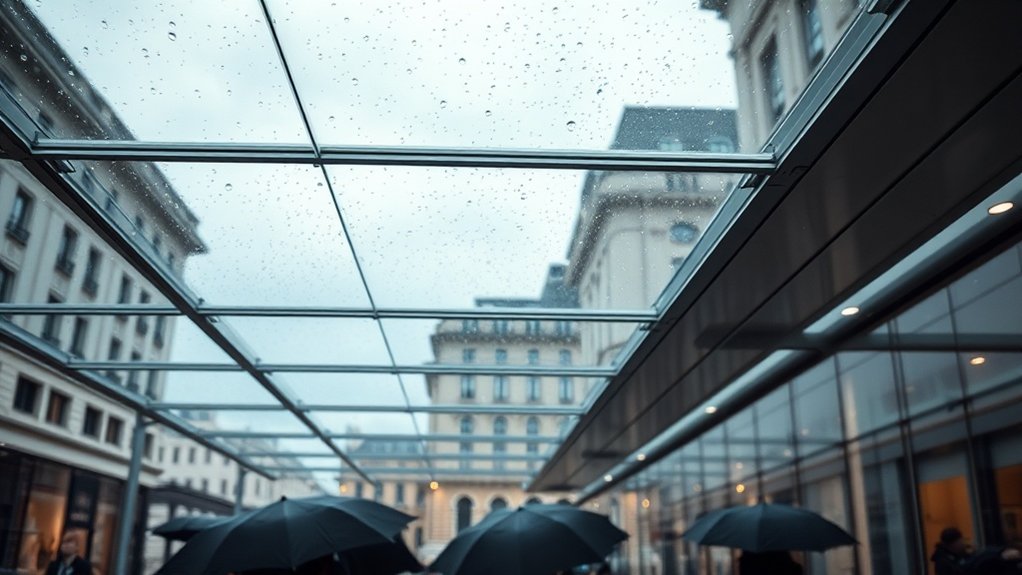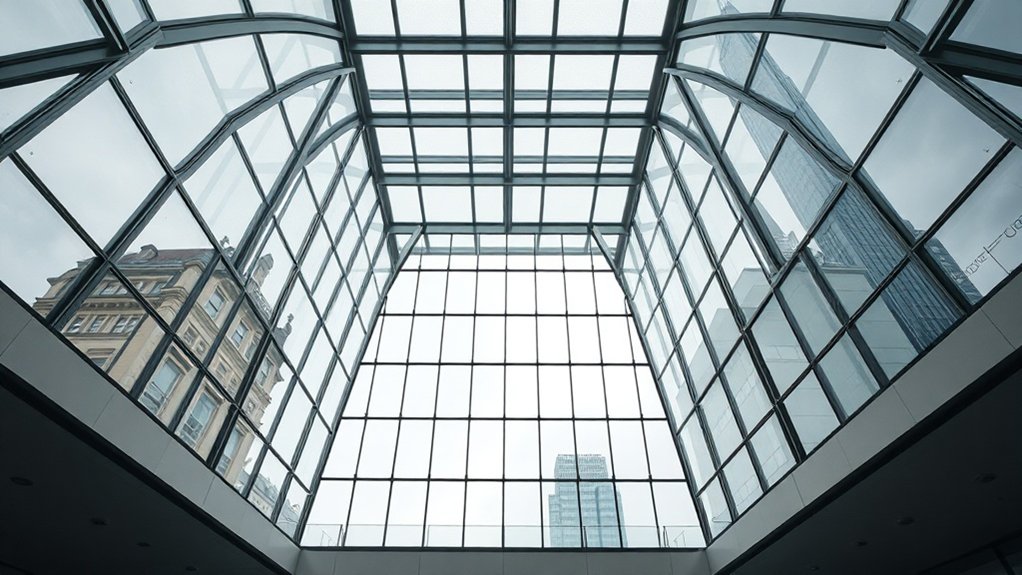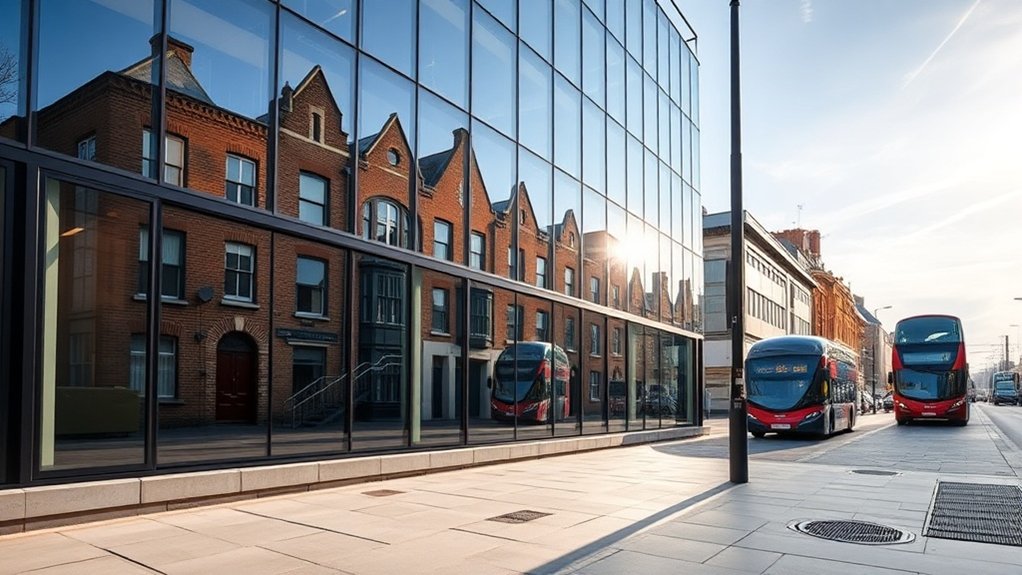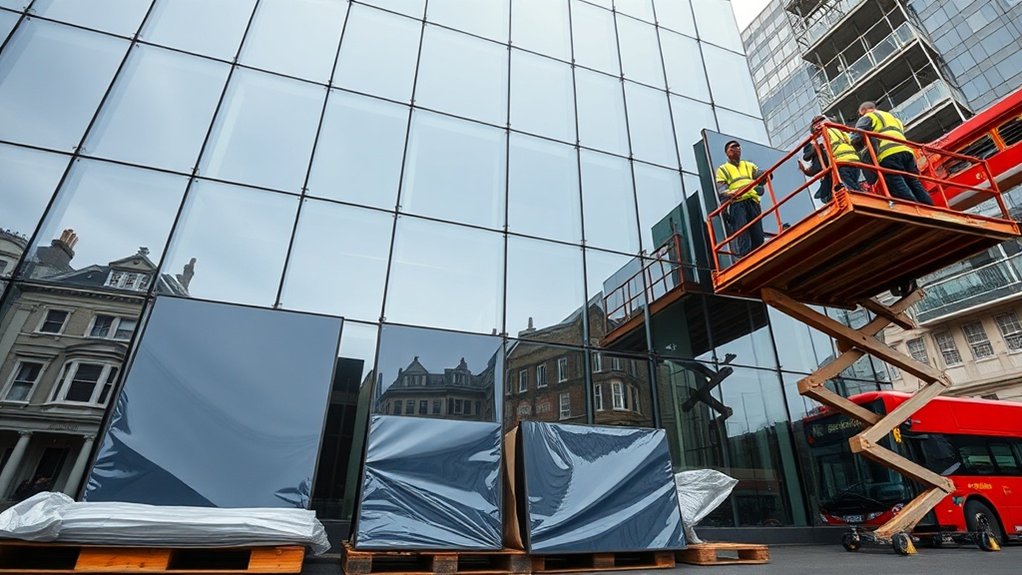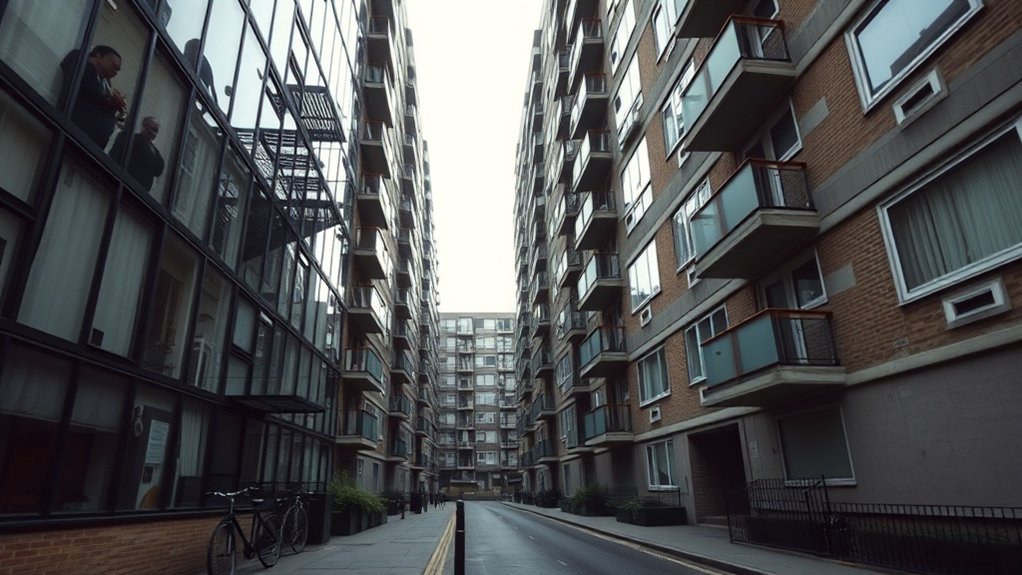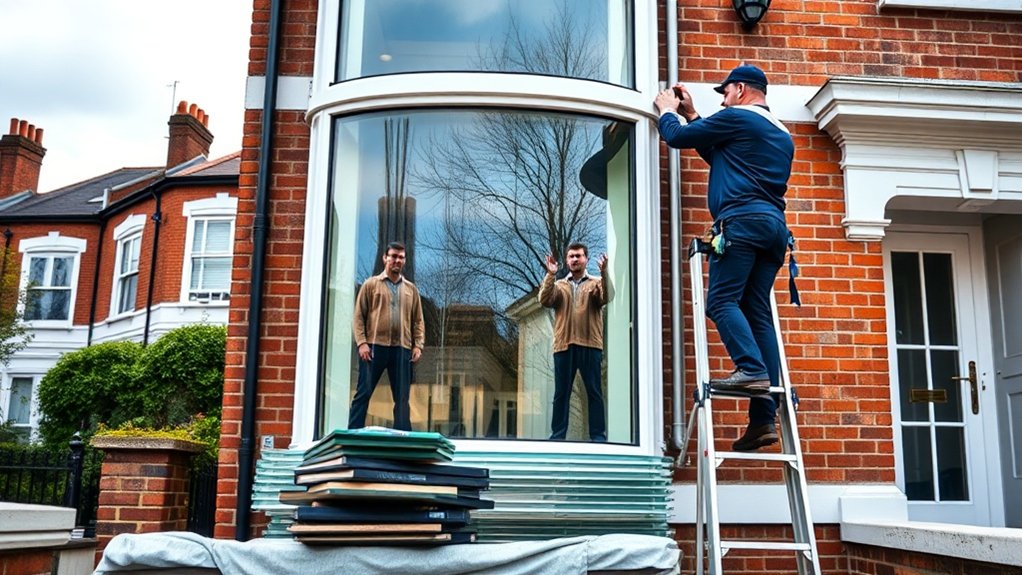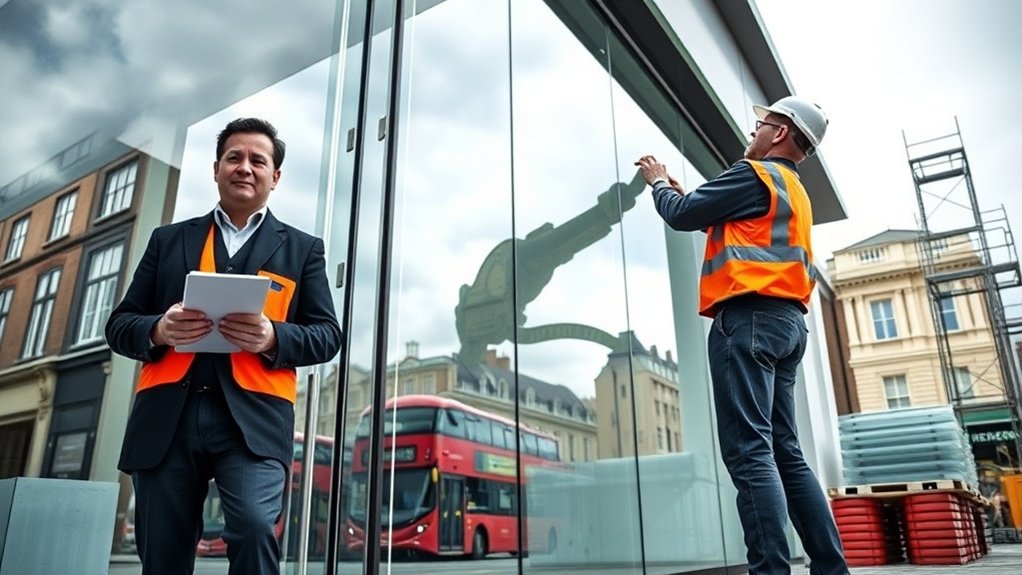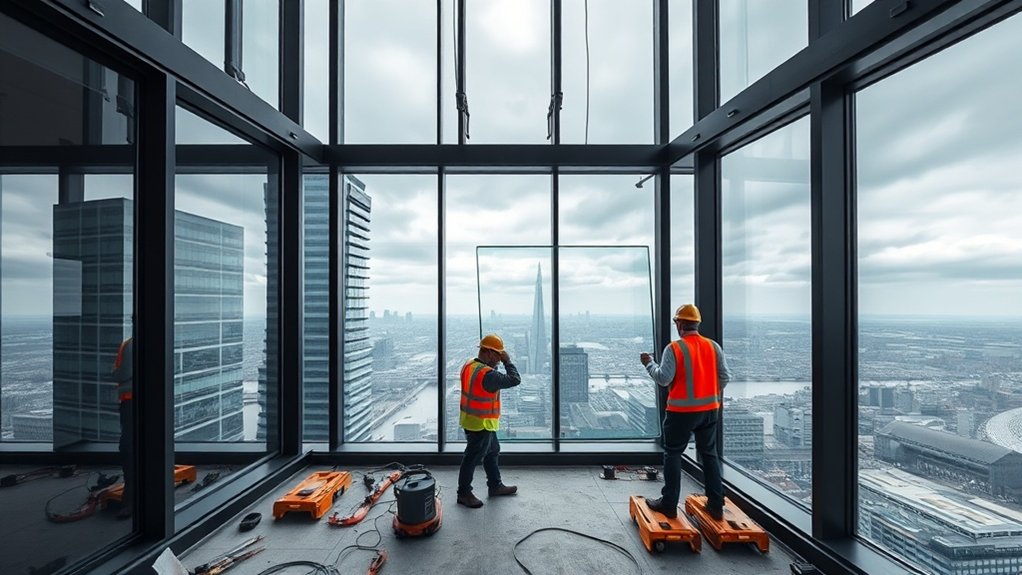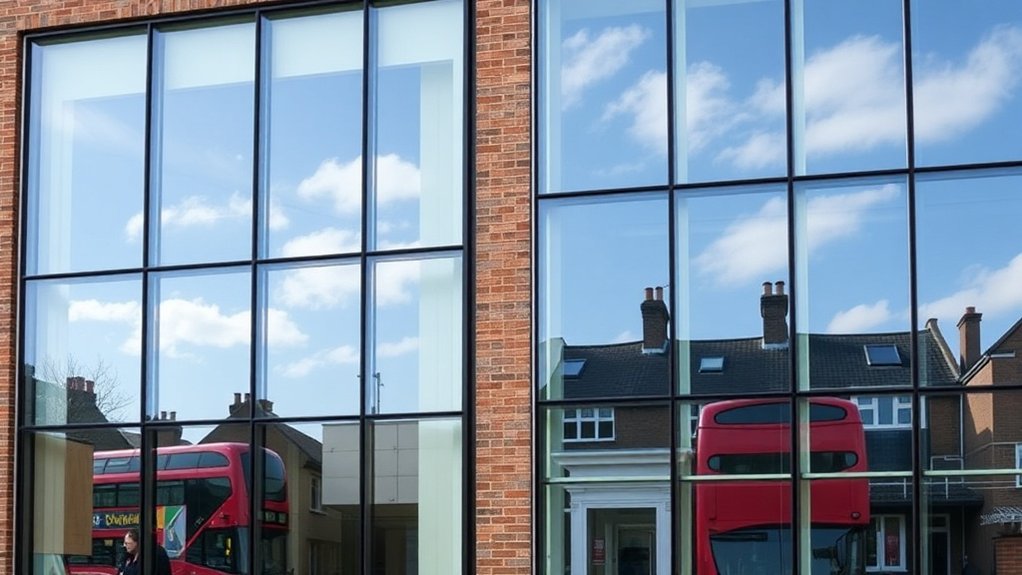
If you run an office, shop or hotel in Bow, the glass in your frontage does far more than let the light in. It keeps heat where you want it, holds back traffic noise, resists break-ins and, on upper floors, stops people falling. Our commercial glazing in Bow service covers the whole job, from surveying a tired 1960s shopfront to handing over a new curtain wall, with every unit sized around real U-values and acoustic figures. This page explains the systems we fit, the rules you must meet and what drives cost.
Key insights
- We design, supply and fit curtain walling, structural glazing, shopfronts and replacement windows for commercial buildings across Bow.
- Every system is specified against Approved Documents L, B and K, with tested evidence for fire, impact, security and thermal performance.
- Low-E coatings, solar-control glass, warm-edge spacers and argon-filled units cut heating and cooling bills without darkening the interior.
- We have long experience with listed buildings and conservation areas in Bow, E3, fitting slimline units and secondary glazing the planners accept.
- Our service runs from survey and cost planning through installation to planned maintenance, with a digital record of every pane.
What Commercial Glazing Involves in Bow
Put simply, commercial glazing in Bow means surveying, specifying, supplying and fitting glass systems for buildings used for business: offices, retail units, restaurants, hotels, surgeries and mixed-use blocks with flats above shops. The glass is only one part of the package. Frames, brackets, sealants, thermal breaks and drainage paths decide whether the façade performs or leaks within five years.
Expect us to start with a measured survey, not a catalogue. We check how the structure will carry the new load, where services run behind the façade and how the glass will be lifted onto site. Many jobs in Bow, E3 sit in older stock, so we often marry a modern system to a Victorian brick frontage or an inter-war concrete frame, which brings conservation officers and planning conditions into the conversation. We also plan for cleaning and for swapping a cracked pane on the third floor.
Main Commercial Glazing Systems and Glass Types
The first decision on any commercial job in Bow is which system family suits the building, and only then which glass goes into it. A single-storey retail parade needs something very different from a four-storey office block or a glazed atrium link. Getting this right early keeps the engineer, the architect and the budget pointing the same way.
Key Commercial Glazing Systems
Most projects we price draw on four system types. Stick curtain walling is assembled on site from mullions and transoms, then infilled with glass or spandrel panels; it suits refurbishments and awkward geometry because it is adjusted piece by piece. Unitised curtain walling arrives as factory-made storey-height panels craned onto brackets, so it goes up faster with tighter airtightness but needs good access and a simpler elevation.
Structural glazing uses bonded or point-fixed glass with the framing hidden behind, giving the near-frameless look flagship retail and reception areas want. The fourth family is framed shopfront and window systems in aluminium or steel, which cover most high-street work. For listed buildings around Bow, E3 we also fit slimline steel-look aluminium and heritage timber systems that copy the original sightlines while taking a modern sealed unit.
Popular Commercial Glass Types
Once the system is settled, the glass make-up decides most of the performance. Toughened glass is heat-treated so it is around four times stronger than ordinary float glass and breaks into small blunt pieces, which makes it the default for doors, low-level panels and anywhere people might walk into it.
Laminated glass bonds two or more panes with a plastic interlayer; if it cracks, the pieces stay put, so it is used for overhead glazing, balustrades and security screens. Thicker interlayers also knock a useful amount off traffic noise. Insulated glass units trap argon between panes separated by a spacer bar, and this is where the U-value comes from.
Coatings do the fine-tuning. A low-E coating reflects room heat back inside, while a solar-control coating limits the sun's energy, measured as the g-value. Low-iron glass removes the green tint on display windows. We match thickness, coating and spacer to the loads and edge condition so the unit lasts rather than fogging early.
Bow, E3 Building Regulations and Safety Rules for Glazing
Every piece of commercial glazing we fit in Bow has to satisfy the Building Regulations, the relevant British Standards and often a fire strategy written by a consultant. Building control will want test certificates and insurers will ask for them after a claim. Agreeing the compliance route before ordering avoids redesign.
Key Bow Glazing Standards
Three Approved Documents shape nearly every specification. Approved Document L sets thermal limits; replacement windows in existing non-domestic buildings in England need a whole-window U-value of 1.6 W/m²K or better, with curtain walling assessed on an area-weighted basis. Approved Document B governs fire, including compartment lines, escape routes and spread of flame across external walls. Approved Document K covers impact and guarding, so glazing below 800 mm in walls or 1500 mm in doors must be safety glass to BS EN 12600, and external barriers must reach 1100 mm.
Planning policy in Bow, E3 can add conditions on overheating, reflectivity and the appearance of a frontage in a conservation area. Beside a main road or railway, an acoustic report may demand a specific sound reduction, which pushes the specification towards laminated acoustic units. We bring these requirements together on one schedule at design stage.
Safety Compliance And Testing
Compliance is proved with evidence, not promises. For safety glass we rely on UKCA marking traceable to BS EN 12150 for toughened and BS EN 14449 for laminated. BS 6262 says where each class of glass may be used, and BS 6180 covers barriers and their loads.
On fire-rated screens and doors we install only complete tested assemblies: glass, beads, seals and frame from one tested combination, because swapping a gasket for a cheaper one voids the certificate. Impact zones and guarding heights are marked on the drawings and the test reports go in the O&M manual.
Larger façades get further checks. Hose tests show whether installed joints keep water out, and a mock-up panel lets the design team approve sightlines before the full order. Where security matters we specify to PAS 24 or LPS 1175 and can offer Secured by Design products, which satisfies the insurer and building control at the same time.
Energy-Efficient Commercial Glazing to Cut Costs
Glazing is usually the weakest part of a commercial building's envelope, so it is also where an upgrade pays back fastest. A single-glazed shopfront loses heat at several times the rate of a modern double-glazed unit, and a south-facing office with clear glass spends heavily on cooling in July.
The ingredients are well understood. A soft-coat low-E coating on the inner pane reflects warmth back into the room. Argon in the cavity slows conduction, and a warm-edge spacer cuts the cold bridge where condensation forms first. On sun-facing elevations a solar-control coating with a g-value around 0.3 to 0.4 trims the cooling load without turning the glass dark. Triple glazing earns its keep on north elevations and in rooms where comfort outweighs capital cost.
Installation quality matters as much as the glass. A thermally broken frame with airtight tapes stops the gains leaking away around the edges. Switchable glass tied to a building management system suits larger buildings, though for most Bow businesses a well-specified static unit is better value.
Security and Fire-Resistant Commercial Glazing in Bow
Business premises in Bow often need glass that resists two different threats: a brick through the window at two in the morning, and a fire spreading between floors or into an escape stair. Both can be handled by glass that still looks like ordinary glass, provided the products are tested to the right class and the frame, fixings and glass stay together as one certified assembly. The sections below cover fire-rated systems, security glazing and the standards each must meet.
Fire-Rated Glass Systems
Fire-rated glazing lets you keep open sightlines in a compartmented building. Instead of a solid wall between a reception and a protected corridor, a glazed screen holds back fire and smoke for 30, 60 or 120 minutes while staff still see across the space, which suits offices, schools and hotels.
There are two classes. Integrity-only glass, marked E, stays in place and stops flames and hot gases but still radiates heat. Integrity-and-insulation glass, marked EI, uses clear intumescent interlayers that foam under heat and keep the unexposed face cool enough for people to pass. Both are classified to BS EN 13501-2 and must sit in the matching tested frame.
Enhanced Security Glazing
Shops, pharmacies, estate agents and ground-floor offices in Bow, E3 tend to attract opportunist attacks. Laminated security glass with a thick PVB or ionoplast interlayer holds together under repeated blows; the glass cracks but no hole opens. Classes under BS EN 356 run from P1A to P8B, with P4A or P5A sensible for most retail.
Where a building is listed, we can fit a security laminate inside existing frames or add secondary glazing behind the original window so the street elevation is unchanged. Higher-risk premises can have curtain walling tested to LPS 1175 for sustained attack.
Security glass does not have to look defensive. Ceramic frit patterns, printed interlayers and tinted laminates all work with security build-ups, so a branded frontage or privacy band can sit in the same unit. At street level we pair visible measures such as laminated glass and good lighting with quieter ones like reinforced frames and anti-lift beads.
Compliance With UK Standards
The standards here are specific. Approved Document B sets the fire requirements, Approved Document Q covers security on new dwellings, and BS EN 13501 and BS 476 give the fire classifications. For attack resistance, BS EN 356 covers manual attack and BS EN 1063 ballistic performance; PAS 24 and LPS 1175 test complete doorsets rather than the glass alone.
We work from certified systems and never pair a fire-rated glass with an untested frame to save money. Early meetings with the fire engineer, the insurer and the architect settle which lines in the building need which rating.
Done well, the fire and security specification disappears into the architecture. Long clear screens and slim steel-look frames give the open look clients want, while the paperwork behind them satisfies Bow building control and the insurer.
How to Choose Frames, Glass Specs and Design
Moving from sketch to order is a technical exercise. Start by writing down the targets: the U-value building control expects, the sound reduction the acoustic report asks for, the security class the insurer wants and how much solar gain the building can tolerate. With those fixed, the frame material and glass build-up almost choose themselves.
For frames, thermally broken aluminium covers most commercial work; it is slim, stable over large spans and takes a powder-coated finish in any RAL colour. Steel suits heritage replacements and fire-rated screens, while uPVC rarely makes sense beyond small retail units. For glass, pair a low-E coating with solar control where sun is the problem and keep light transmittance above about 60 percent so the interior does not feel gloomy. Settle the façade grid early, because pane sizes and opening positions decide lifting equipment, replacement logistics and how the frontage reads from the street.
Commercial Glazing for Bow Offices, Shops and Hotels
Walk along any parade in Bow and you will see glazing doing different jobs on neighbouring buildings. An office wants daylight without glare. A shop wants passers-by to see the stock. A hotel wants guests to sleep. The same glass cannot do all three well, so our commercial glazing in Bow specifications change from one client to the next.
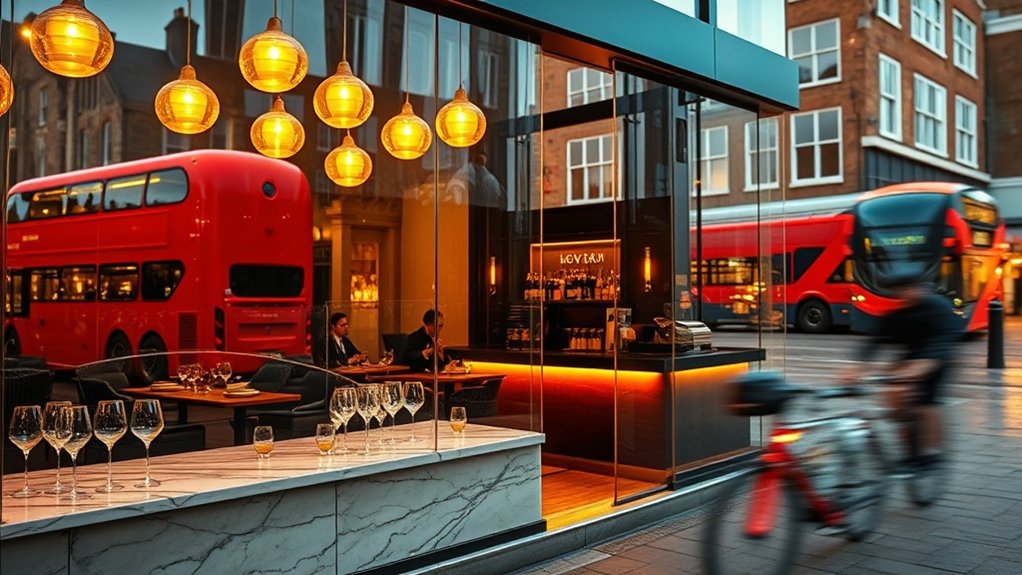
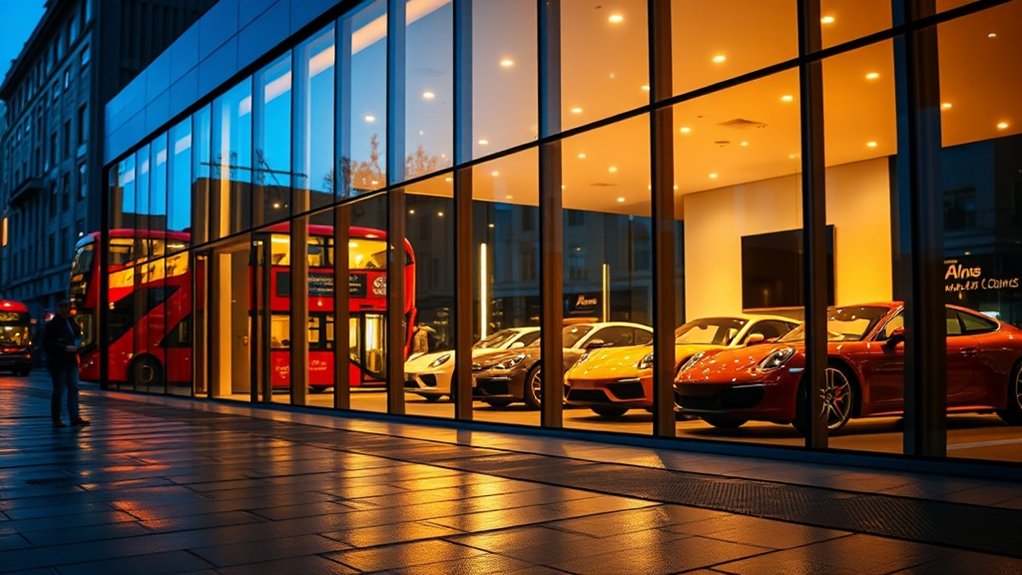
Offices usually get neutral low-E solar-control units, acoustic laminates on road-facing elevations and openable vents that work with the mechanical ventilation. Retail fronts favour low-iron, anti-reflective glass so the display reads clearly under shop lighting at night, with laminated security glass at ground level and printed interlayers for branding. Hotels need high acoustic ratings in bedrooms, obscured or switchable glass for bathrooms and meeting rooms, and robust ground-floor glazing around bars and entrances that can take knocks from luggage.
Choosing a Commercial Glazing Contractor in Bow
The specification only becomes a working façade if the contractor can deliver it. You are buying engineering, coordination and site management as much as glass. A good commercial glazing contractor in Bow, E3 will talk you out of an over-specified unit as readily as into a better one.
Ask for evidence rather than brochures. Projects on older Bow buildings with awkward access and live tenants tell you more than a glossy new-build case study.
- Technical capability – In-house design and drawing, U-value and acoustic calculations, structural checks on fixings, and test certificates for the systems proposed.
- Relevant local experience – Completed work in conservation areas, on occupied buildings and on tight sites where deliveries and scaffold had to be planned around neighbours.
- Working relationship – Willingness to attend design meetings, speed of response on drawings, and proof of FENSA or CERTASS registration and proper insurance.
Commercial Glazing Costs, Timelines and Disruption
With design and contractor settled, the remaining risks are money, time and the effect on trading. Costs vary widely: a framed aluminium shopfront in Bow might come in at a few hundred pounds per square metre, while structural glazing or unitised curtain walling can run several times that once brackets and access are included. Ask for the cost plan split into glass, framing, fixings, access equipment and out-of-hours labour so you can see where the money goes.
Request an options schedule showing how a change of coating, a larger pane module or a different finish moves the price and the energy payback. On programme, insist on a phasing plan that fits around trading hours, deliveries and critical services behind the façade. Method statements should cover noise, dust, overnight security and protected routes for staff and customers. A mock-up and a clash check against the structural drawings prevent most of the surprises that cause delay and rework.
Maintaining and Upgrading Commercial Glazing in Bow
A commercial façade is a working asset, and its performance after handover depends on how it is looked after. Seals age, frames move with the seasons, drainage slots block with leaves and coatings pick up damage from careless cleaning. Where new glass meets original brick or stone on older buildings, those junctions deserve particular attention. Our aftercare for commercial glazing in Bow has three strands.
-
Planned maintenance – An annual inspection of gaskets, sealants, drainage and fixings, an agreed cleaning regime, and a digital register listing every unit with its specification and warranty date.
-
Phased performance upgrades – Replacing single or early double glazing with higher-spec solar-control, acoustic or security units frame by frame, without a full façade replacement, as energy targets tighten.
-
Monitoring – Simple sensors for surface temperature, condensation and impact on large façades, feeding alerts to the building management system so a failed unit is found before it causes damage.
Related work we take on includes architect glazing.
Frequently Asked Questions
How Does Commercial Glazing Impact a Building’s Market Value in Bow, E3?
New glazing improves the value of a commercial building in Bow, E3 in two measurable ways. It lifts the EPC rating, which matters because non-domestic lettings need an E or better and the bar is expected to rise, and it cuts the running costs a tenant or buyer will model. A clean, well-lit frontage also attracts better tenants and supports higher rents. We can supply before-and-after U-value figures to support a valuation.
Can Commercial Glazing Help With Noise Reduction From Bow Traffic and Transport?
Yes. Noise from roads, rail and flight paths is tackled with acoustic laminated glass, panes of different thicknesses in the same unit, a wider cavity and well-sealed frames. A standard 4-16-4 double-glazed unit gives roughly 30 dB of reduction; an acoustic unit with a 6.8 mm laminated pane and a 10 mm outer pane can reach around 40 dB. Secondary glazing with a 100 mm gap does even better on listed buildings. Give us your acoustic report and we will specify to the stated Rw figure.
Are There Grants or Incentives for Upgrading to Modern Commercial Glazing in Bow?
Funding exists but changes often and is spread across several schemes. Businesses in Bow can sometimes draw on local authority energy-efficiency grants, regional decarbonisation funds and interest-free energy loans aimed at small firms. Capital allowances may apply to qualifying works, and improving the EPC protects you from future lettings restrictions. The sensible route is to commission an energy assessment first, then shape the glazing scope so it qualifies under whatever schemes are open. We can point you to current options when we quote.
How Does Glazing Performance Differ Between Historic and Newly Built Bow Properties?
Older Bow buildings usually still have single glazing in timber or steel frames, which loses heat, lets in noise and suffers condensation, yet the frames are often part of the protected character. New-build commercial units arrive with thermally broken frames and low-E double or triple glazing designed to meet Part L from day one. The gap is closed in historic stock with slimline double-glazed units in the original rebates, secondary glazing behind the existing window, or matched replacement frames where the planners agree, so a listed frontage can perform close to new-build.
What Warranties and Insurance Should I Expect With Commercial Glazing Installations?
As a rule, expect sealed units to carry a 10-year warranty against fogging, aluminium frames and powder coating 10 to 25 years depending on system and location, and workmanship for 1 to 2 years. Ask to see the installer's public liability and professional indemnity cover, plus product liability from the system supplier. On bigger projects an insurance-backed guarantee and collateral warranties to a landlord or funder are standard. Check the warranty states response times for defects, and keep the maintenance records it requires.
Summary
Good commercial glazing in Bow, E3 pays for itself in lower bills, a safer building and a frontage that brings customers and tenants through the door. Specify the right system, prove compliance with tested products, and plan the installation around your trading so disruption stays short. We are happy to survey your building, talk through the options and give you a free itemised quote; call us to arrange a visit. Whatever the job, the Bow glaziers on our team arrive with the stock and tools to finish in one visit wherever possible.